Know what each marketplace actually earned you, and what to reorder before you run out.
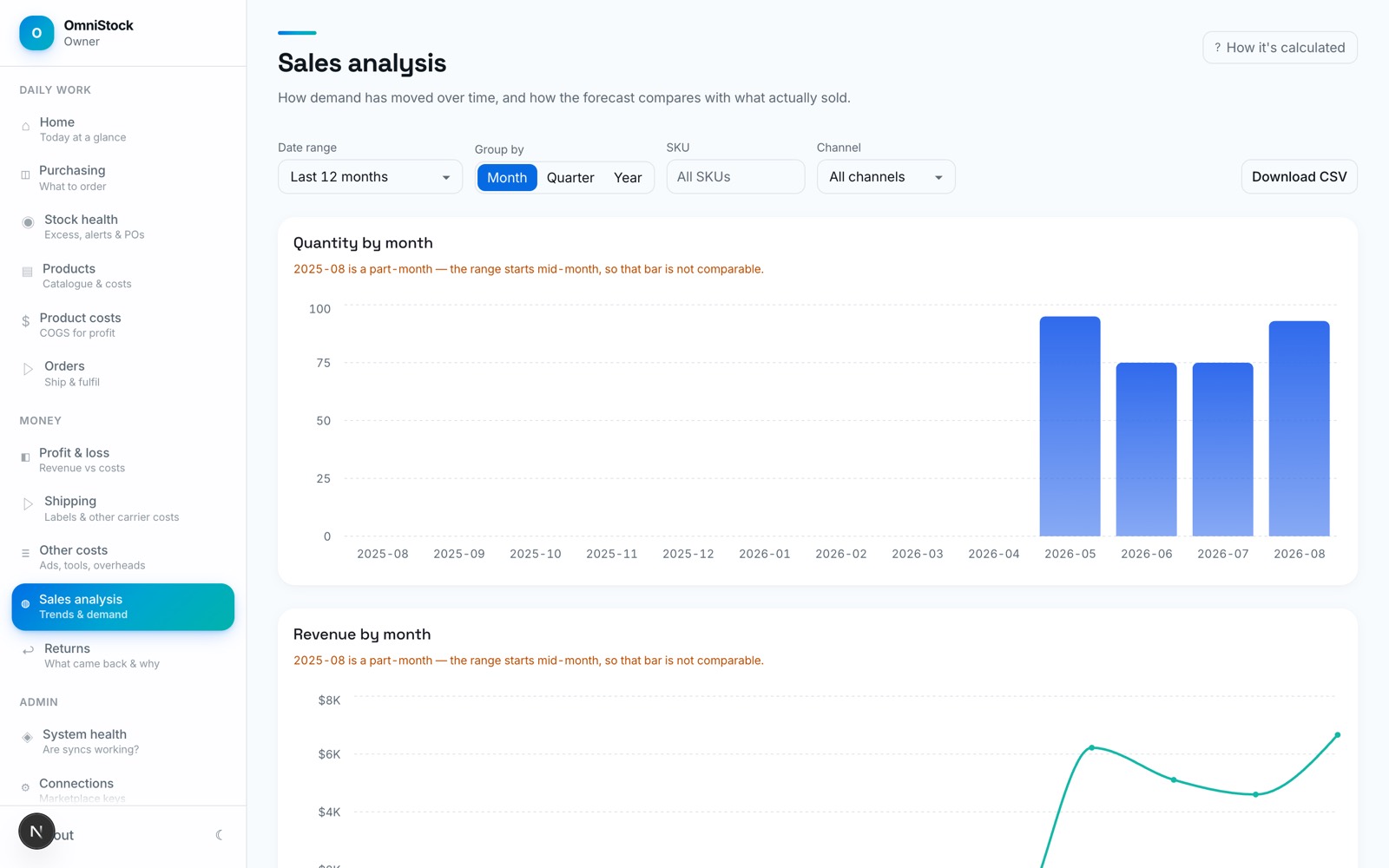
OmniStock reads every order, refund and fee from Amazon, Shopify, eBay and Walmart, plus your fulfilment platform, and turns them into a profit report per channel and per product, a daily reorder list driven by a real demand forecast, and an automatic dispatch summary.
Why this exists
The gap between a fulfilment tool and a spreadsheet
Your fulfilment platform knows what shipped. Your marketplaces each know what they charged you. Neither knows what you made, because neither can see the other three. So the answer ends up in a spreadsheet somebody rebuilds every month from four dashboards.
That spreadsheet is where the errors live, and it is always a month behind the decision it is meant to inform.
Profit
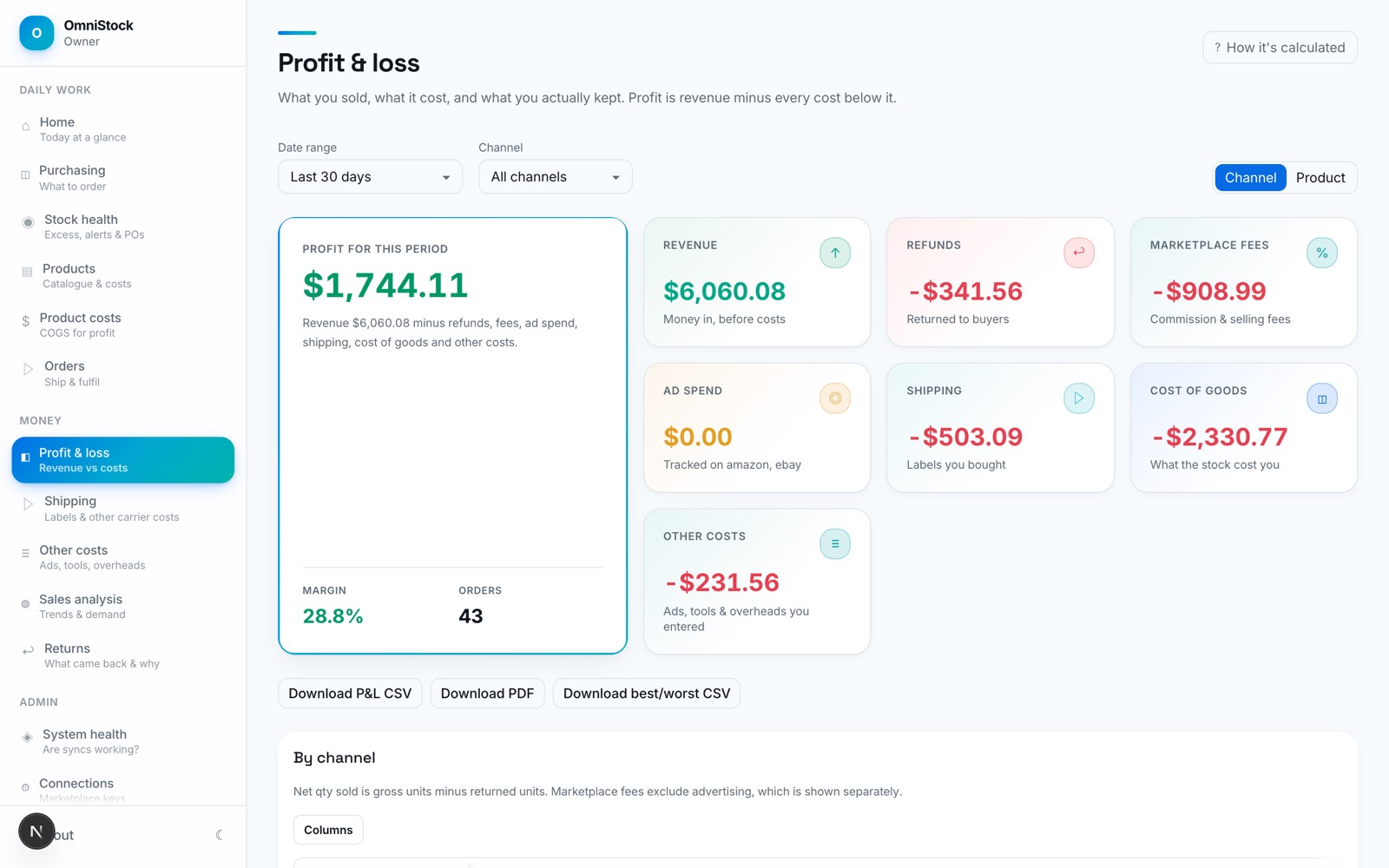
Profit per channel and per product
Revenue minus refunds, marketplace fees, advertising, shipping, cost of goods and your own overheads — pulled from each marketplace's own financial API, not estimated. Amazon FBA is reported as its own channel, split from merchant-fulfilled, because its economics are different.
Purchasing
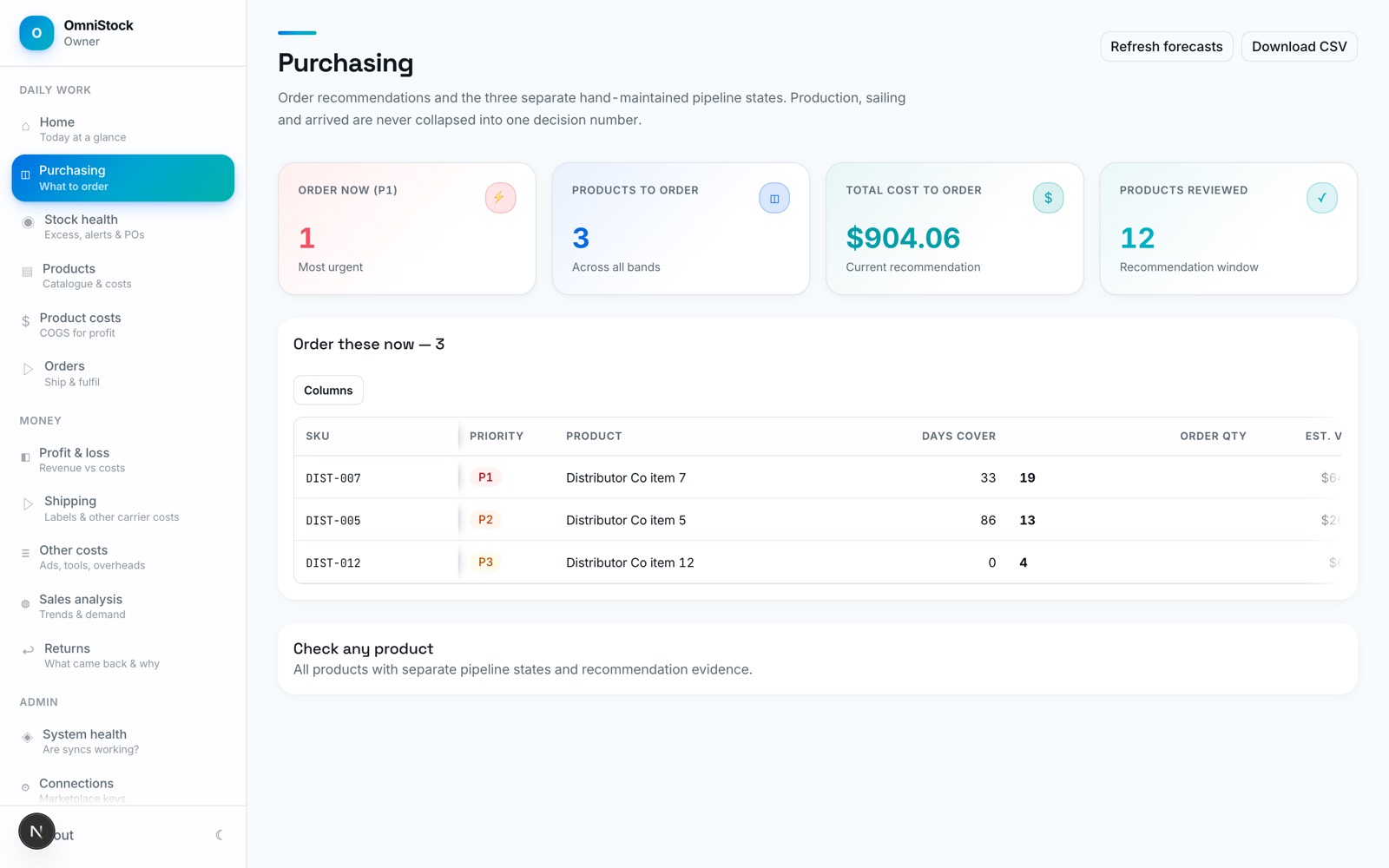
Reorder alerts from an actual forecast
A nightly forecast per SKU picks between several models and takes the one that fits your history, then answers two separate questions: whether you are about to run out, counting only stock that can actually be sold in time, and how much to order, subtracting what is already in production or on the water.
Fulfilment
Shipping and dispatch, without a fifth dashboard
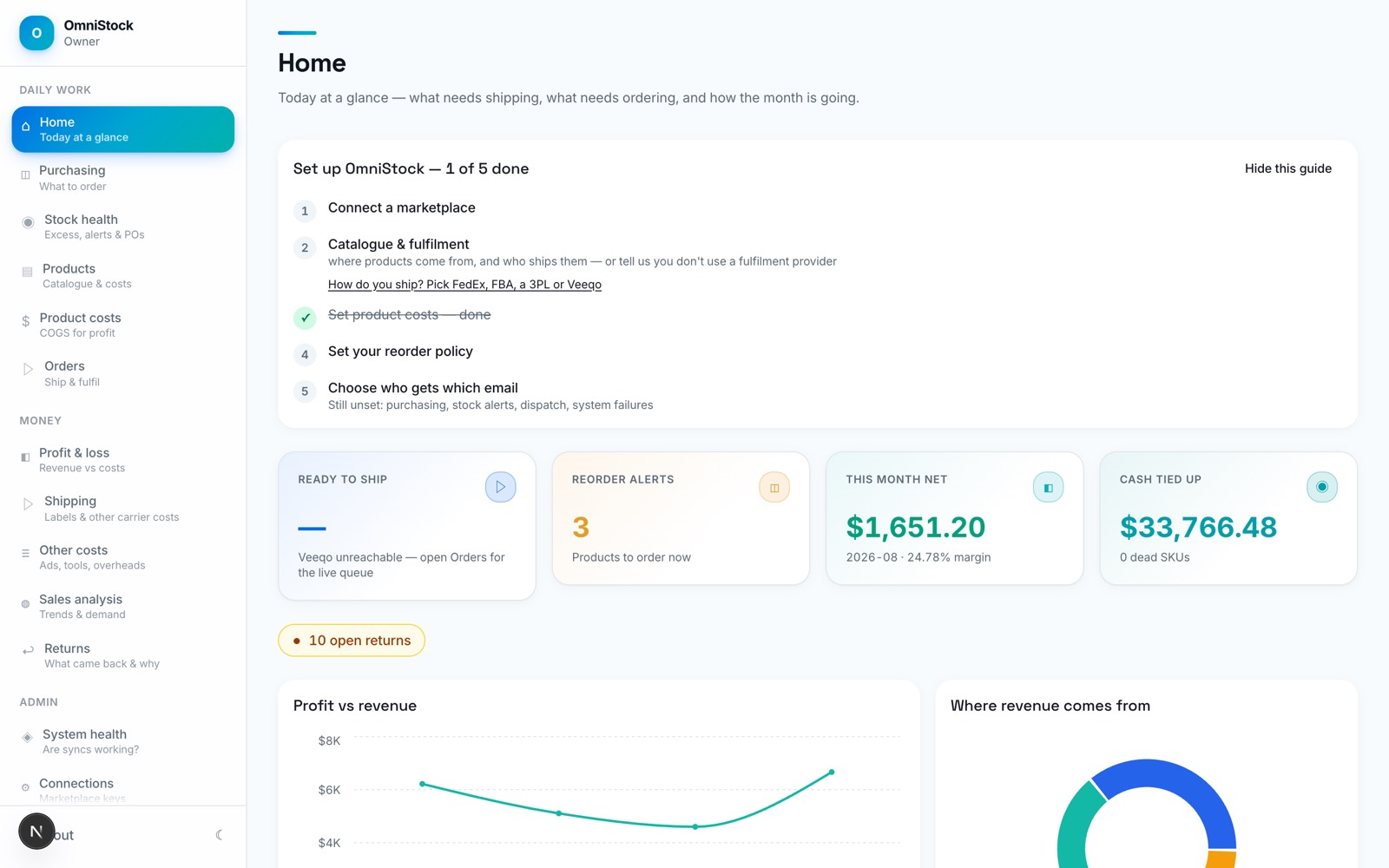
Buy labels for the day's orders, see what shipped and what is overdue, and get a dispatch summary each morning. Every label cost lands in the profit report against the order that incurred it.
The rest of the day
Returns and stock health, in the same numbers
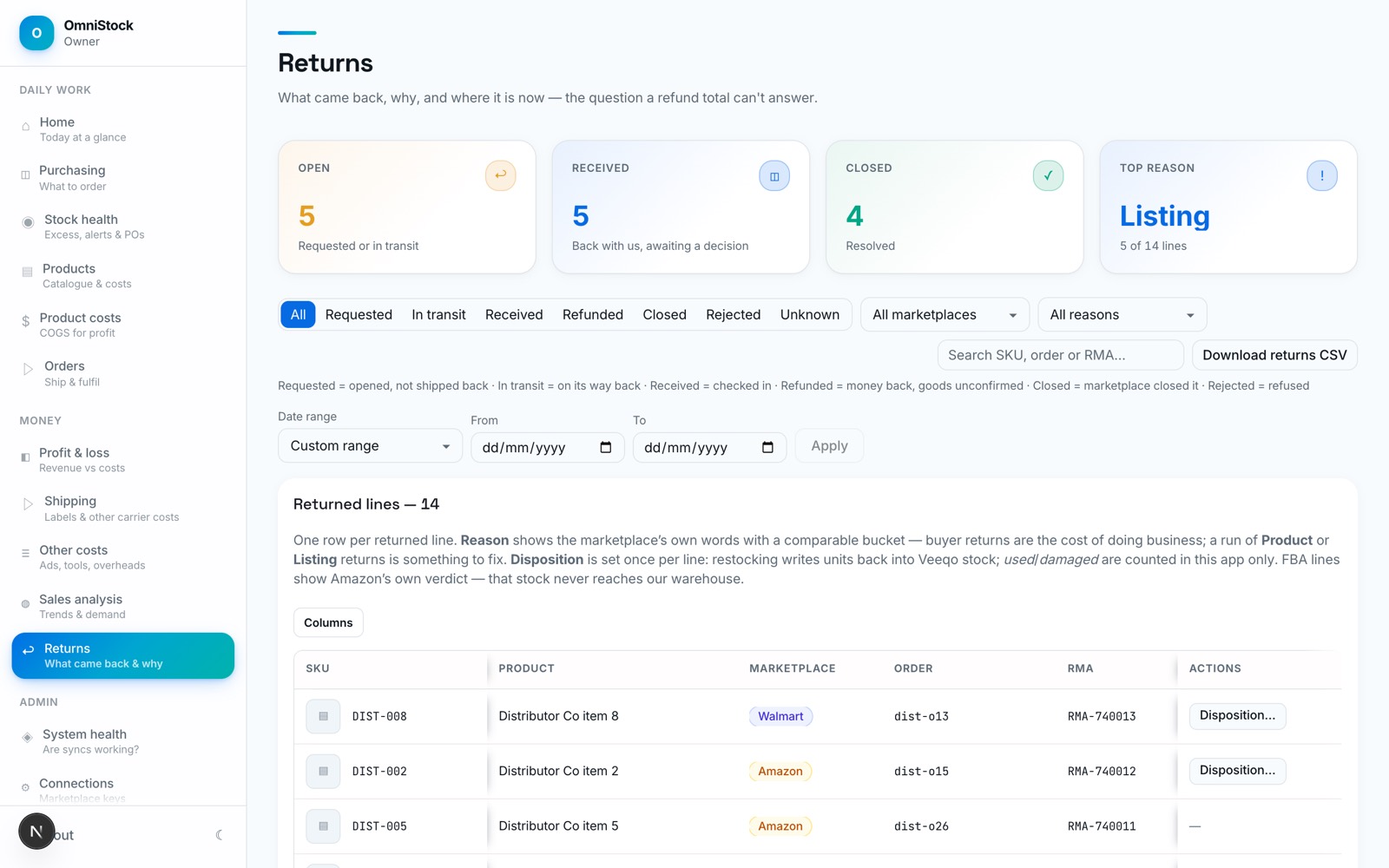
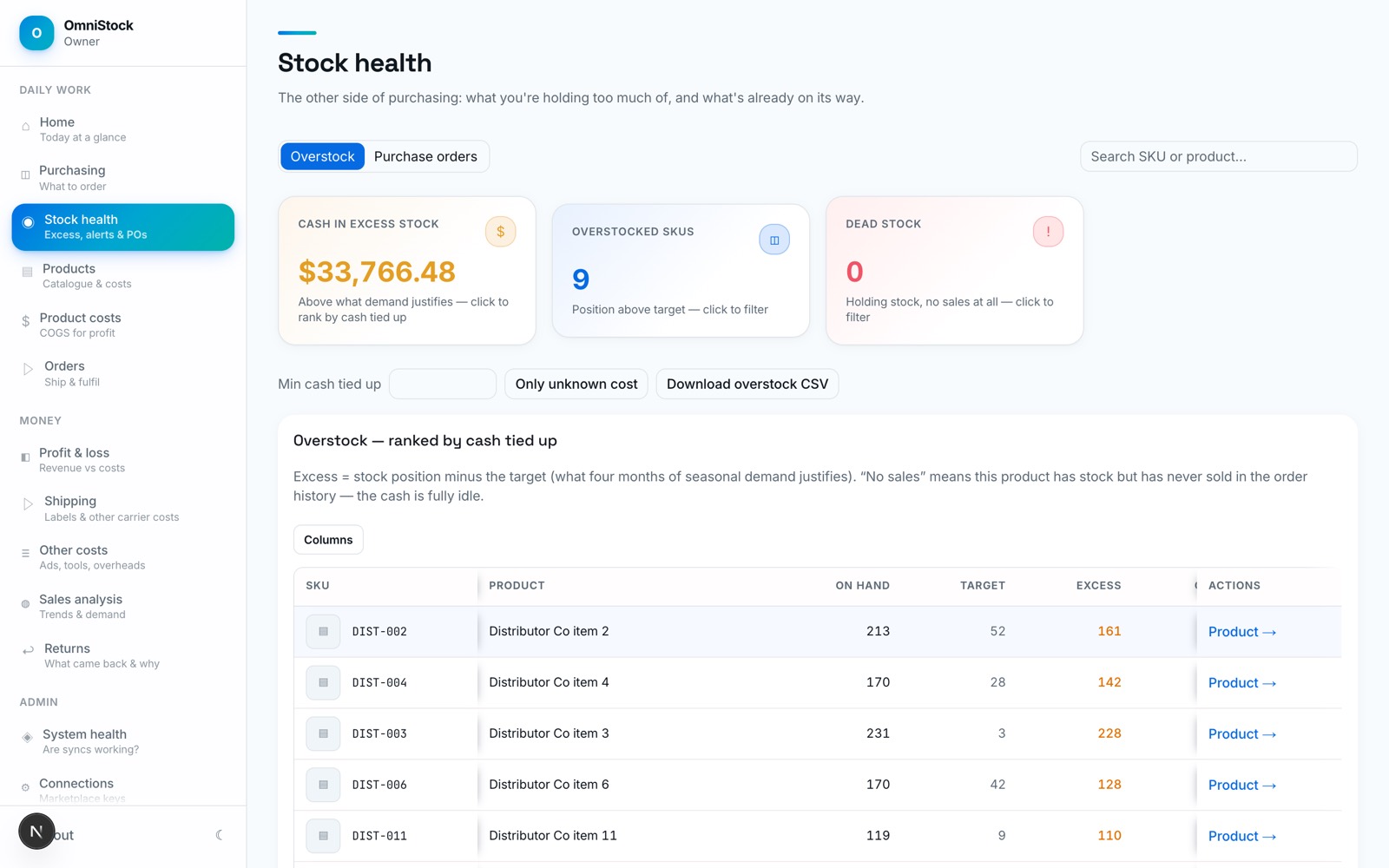
A refund total tells you money went back. It does not tell you what came back, why, or whether it can be sold again — and it does not tell you what you are holding too much of.
What we will not do
Where a marketplace does not tell us something, we show the gap
Fees charged by payment gateways other than Shopify Payments are not exposed by Shopify's API. Walmart and Shopify do not report ad spend. Amazon's returns feed needs a standard role you have to request. In each case the product says so on the screen where the number would have been, rather than filling it with an estimate. An absent figure with an explanation is workable; a confident wrong one is not.
See it against your own numbers
OmniStock takes a small number of sellers at a time. Tell us what you sell on and how you ship, and we will say plainly whether it fits you yet.